These excerpts come from OrchideaSOL, a library of solo orchestral instrument recordings. Neither the codecs nor the predictor saw this corpus during training, and it is far from the mixed, mastered music they were trained on: single instruments, extended techniques, long quiet decays.
The models are unchanged — the same checkpoints as on the MUSDB18 page, with no fine-tuning. Pick an input sampling rate and a codec; every player and spectrogram on the page follows.
- Band-limited input
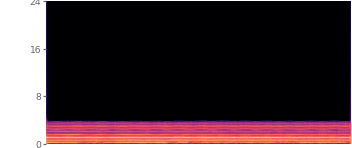
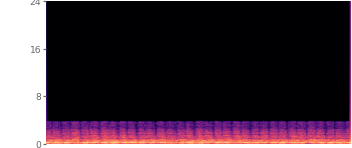
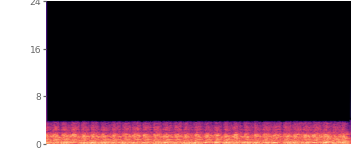
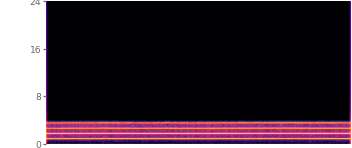
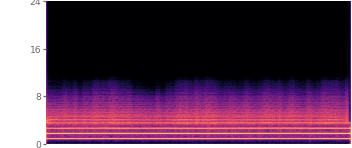
- The input's low band with nothing above the cutoff — the part the decoder already holds exactly. Every system below keeps this band unchanged, so what you hear between them is entirely the band each one recovered.
- A2SB and UniverSR
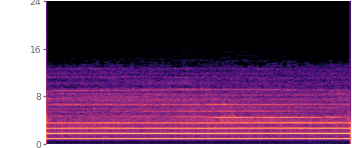
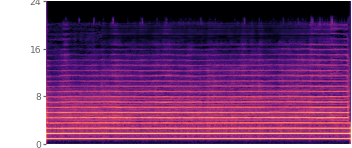
- Two recent published bandwidth-extension systems, run on the same excerpts. Their output is spliced onto the same low band as ours, so only the recovered band differs.
- Ours
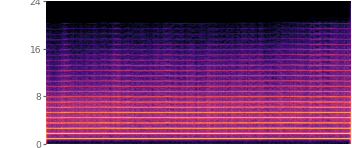
- The band-limited codes completed over residual-quantiser depth, decoded, and spliced onto the low band. No extra bits are sent.
- Codec ceiling
- The same excerpt encoded from the full-band original and decoded again. It is what the codec can reproduce at this bitrate, so it bounds what any predictor inside it can reach. On this corpus the ceiling itself is lower than on music, which limits every system built inside the codec.
- Reference
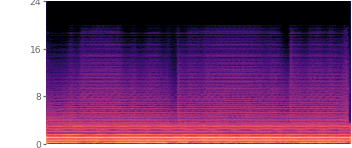
- The original 48 kHz excerpt, untouched.
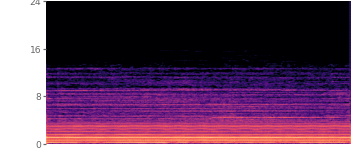
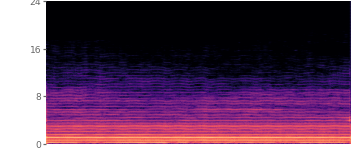
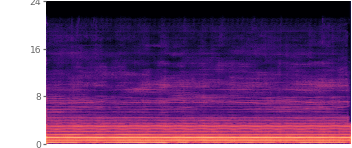
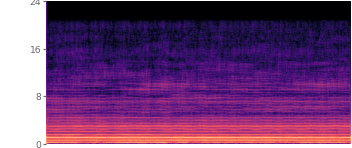
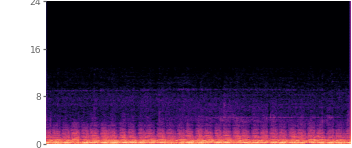
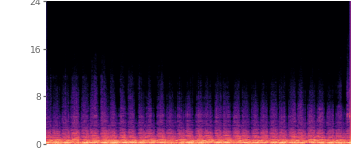
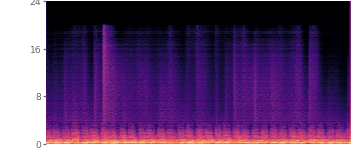
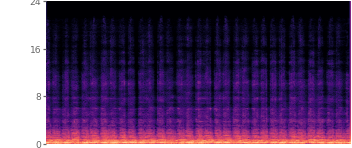
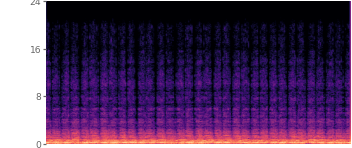
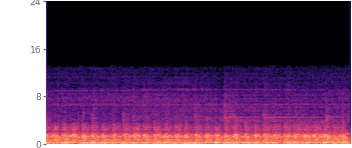
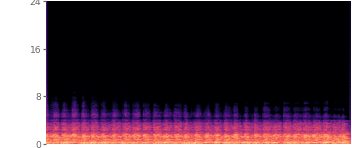
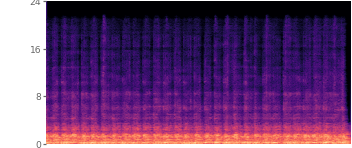
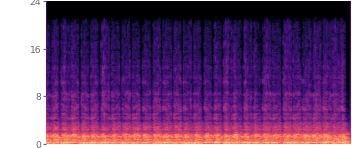
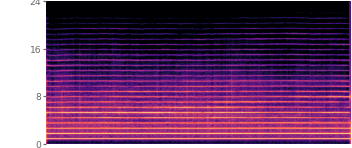
Spectrograms run from 0 to 24 kHz; the vertical axis is marked in kHz. Excerpt names follow the OrchideaSOL convention, instrument–technique–pitch–dynamic.
Everything above 4 kHz is missing from the input and has to be recovered, inside the SpectroStream codec.
Viola with mute, ordinario
C4, fortissimo — Va+S-ord-C4-ff-3c-T16u
No 32 kHz model is provided by the authors.
Cello with mute, tremolo
D2, mezzo-forte — Vc+S-trem-D2-mf-4c-N
No 32 kHz model is provided by the authors.
Double bass, tremolo
D♯3, mezzo-forte — Cb-trem-D#3-mf-1c-N
No 32 kHz model is provided by the authors.
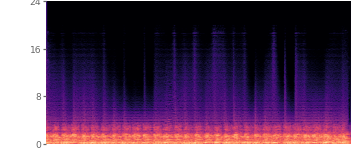
Trumpet in C, ordinario
A5, fortissimo — TpC-ord-A5-ff-N-T13u
No 32 kHz model is provided by the authors.
In-domain results on music are on the MUSDB18 page. Code and trained models: github.com/Multi-Rate-BWE-by-Token-Completion/Multi-rate-BWE.